Vitamin D Injection in Westchester County
Support immunity, mood and bone health with a quick vitamin D shot.
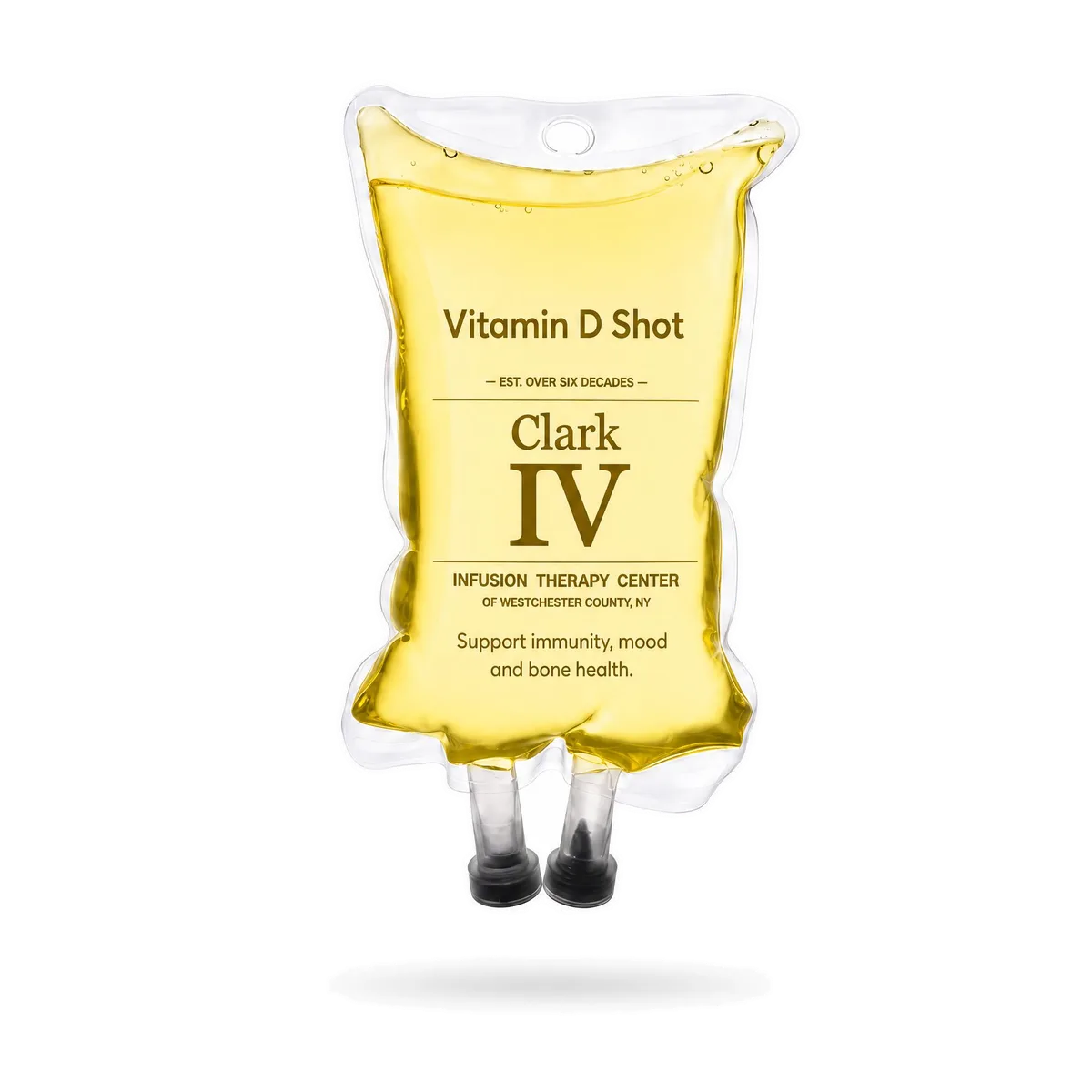

Vitamin D is unusual among nutrients because your body is meant to make most of it from sunlight, which leaves a great many people short of it for reasons that have nothing to do with diet. Long winters in the Northeast, time spent working indoors, diligent use of sunscreen, and naturally darker skin all reduce how much your body produces. Because vitamin D supports your immune system, your bones, your muscles, and even your mood, running low can quietly affect how you feel in ways that are easy to overlook. A vitamin D injection delivers a concentrated dose of D3 directly into the muscle in a matter of seconds.
The form we use is vitamin D3, or cholecalciferol, the same form your skin produces in sunlight and the one research generally favors for raising and maintaining levels. Delivered as an intramuscular shot, it offers a steady, dependable way to support your vitamin D status, which can be a real advantage if you have struggled to keep your levels up with oral supplements or simply find it hard to remember a daily pill. It is a single, focused nutrient given in a single, focused visit.
Here in Westchester County, low vitamin D is especially common through the darker stretch of the year, and patients at Clark IV Infusion Therapy Center often come in seeking steadier support than a daily capsule has given them. Our care team will review your history and, where it makes sense, encourage you to have your levels checked with your own provider so dosing can be guided by real numbers. Vitamin D is powerful and genuinely worth keeping in a healthy range, and because it is fat-soluble and stored in the body, that same potency is exactly why a thoughtful, monitored approach matters.
People sometimes ask whether an injection or an IV drip is the right way to address low vitamin D, and for this particular nutrient the shot is usually the more sensible route. Vitamin D is fat-soluble and stored in the body, so it is given as a periodic intramuscular dose rather than infused frequently, and the injection delivers it efficiently in a quick visit. An IV drip is built around fluids and water-soluble nutrients like B vitamins and vitamin C, which is a different job entirely. So if vitamin D is your concern, the shot is typically what we reach for, while a drip makes more sense when you want broad hydration and nutrient support. Our team will always point you toward whichever genuinely fits.
Benefits you may notice
- A concentrated dose of vitamin D3, the form your body produces from sunlight
- Supports healthy immune function, which many people associate with vitamin D
- Plays a recognized role in bone strength and healthy muscle function
- Often associated with mood, particularly through the darker months of the year
- A dependable option if oral vitamin D has not kept your levels where you want them
- A quick visit that removes the need to remember a daily supplement
What to expect
- 1We review your health history, sun exposure, and any recent lab work during intake
- 2Our care team confirms a vitamin D injection is appropriate for you
- 3We clean the injection site, typically the upper arm or hip, before the shot
- 4The injection itself takes only a few seconds, with a quick pinch and brief pressure
- 5You are free to head back to your day within minutes of arriving
Session length
About 10–15 minutes
Recommended cadence
Periodically, ideally guided by your vitamin D levels
Who it's for
- People who spend most of their time indoors or get little direct sunlight
- Anyone feeling the effects of the darker, shorter days of the Northeast winter
- Those who have been told their vitamin D is low and want steadier support
- People who find a daily oral supplement hard to remember or absorb well
- Anyone focused on supporting immune, bone, and muscle health
- Patients who prefer a periodic shot over a year-round daily pill
A calm place to feel better

What's in it
- Vitamin D3 (cholecalciferol), the form your body makes from sunlight, for immune and bone support
Frequently asked
Do I need a blood test before a vitamin D shot?
It is not strictly required, but because vitamin D is fat-soluble and stored in the body, knowing your level helps us dose sensibly rather than guess. We will often suggest having it checked with your own provider, and our clinical team reviews your history carefully before any injection.
Why would my vitamin D be low if I eat well?
Diet is only a small source of vitamin D. Your body is designed to make most of it from sunlight, so indoor work, sunscreen, darker skin, and our long Northeast winters can all leave levels low regardless of how well you eat. That is why so many people benefit from support.
Is an injection better than taking vitamin D pills?
Neither is universally better; it comes down to what works for you. An injection offers steady, reliable delivery and removes the need to remember a daily pill, which suits people who have struggled to keep their levels up orally. Some patients use the shot periodically and supplement in between.
How often should I get a vitamin D injection?
Because vitamin D is stored in the body, these shots are spaced out rather than given frequently, often every couple of months or guided by your levels. Your care team will help you land on a sensible interval, ideally informed by recent lab work.
Can you get too much vitamin D?
Yes, which is exactly why we take a measured approach rather than stacking large doses. Vitamin D builds up in the body over time, so we review your history, ask about other supplements you take, and encourage monitoring so your levels stay in a healthy range.
Will a vitamin D shot improve my mood?
Many people associate adequate vitamin D with a steadier mood, especially in winter, and correcting a genuine shortfall may help. We frame this as support rather than a treatment for any mood condition, and if you are struggling with your mood, we will encourage you to speak with your provider.
Serving Westchester County
Our clinic welcomes patients from across Westchester County, including White Plains, Yonkers, New Rochelle, Scarsdale, Mount Kisco, Rye, Mamaroneck, Harrison, Bedford, and Chappaqua.
This page is for general information and is not medical advice. IV therapy and injections are administered by licensed clinical staff after screening. Some treatments require lab work or a medical evaluation. Talk to a qualified provider about whether a treatment is right for you.