Laser Therapy in Westchester County, NY
Low-level laser therapy and photobiomodulation offered in a private, team-staffed clinical setting at Clark IV Infusion Therapy Center in New Rochelle.
What is laser therapy?
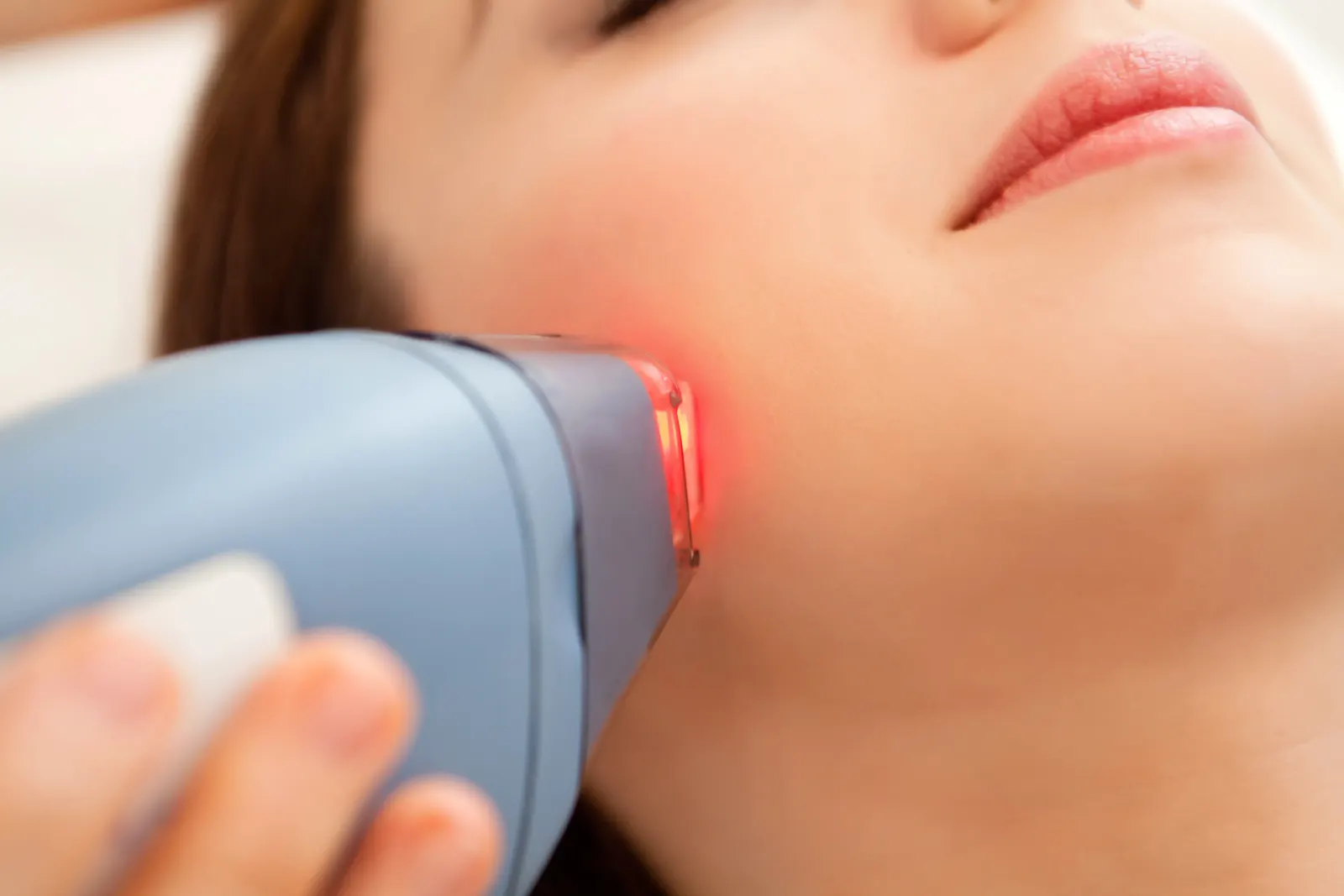
Low-level laser therapy (LLLT) — sometimes referred to as photobiomodulation or cold laser therapy — is a non-invasive outpatient modality that uses specific wavelengths of light to interact with tissues at the cellular level. Unlike high-power surgical lasers, LLLT operates at energy levels that do not damage or cut tissue. Instead, the light energy is absorbed by cellular structures and may support natural cellular processes including energy production, repair signaling, and circulation.
At Clark IV Infusion Therapy Center, laser therapy sessions are conducted in private clinical rooms by our care team. The laser device is positioned near the treatment area, and patients are provided with protective eyewear. Light energy is delivered in a controlled, measured manner based on a pre-session clinical assessment. Sessions are quiet and typically last 20 to 40 minutes depending on the area and protocol involved. Patients do not need to undress for most applications, and there is no recovery period after the session.
The experience is generally described as mild and comfortable. Some patients notice a gentle warmth or mild tingling in the treatment area during the session; others report no physical sensation at all. Most patients return to normal activity immediately. Our clinical team discusses what to expect based on your specific goals and health history before your first session, and we do not make promises about outcomes that we cannot support with honest clinical context.
Potential supportive benefits
Laser therapy may support the following areas as part of a broader wellness approach. These are not medical claims, and outcomes vary between individuals.
Comfort and pain support
Photobiomodulation has been studied for its potential to support comfort in patients with musculoskeletal discomfort; individual responses vary considerably.
Circulation and microvascular support
Certain laser wavelengths may support local circulation and blood flow to tissues, which some patients find helpful for recovery-focused wellness goals.
Tissue recovery support
Light energy may support cellular repair signaling in soft tissues, making laser therapy a modality some patients explore after physical strain or injury recovery.
Inflammation modulation
Some photobiomodulation research suggests the potential for modulating inflammatory processes at the cellular level; this remains an area of ongoing study.
Skin and surface tissue support
Certain wavelengths used in LLLT are studied in aesthetic and skin wellness contexts; laser therapy may complement a broader skin health routine for some patients.
Nerve and sensory support
Some patients explore laser therapy in consultation with their care team for peripheral nerve-related discomfort, where supportive modalities may complement other approaches.
What to expect at your visit
Pre-session health screen
Your care team reviews your health history, current medications, and any conditions that might affect whether laser therapy is suitable for you.
Setup and protective measures
You are seated in a comfortable position in a private clinical room. Protective eyewear is provided, and your care team explains what the device will do during the session.
Light energy delivery
The laser device is positioned near the target area. Light energy is delivered in a controlled protocol specific to your goals. Most patients feel little or nothing during delivery.
Monitoring throughout
Your care team remains present and monitors your comfort and response throughout the session, adjusting positioning or protocol as needed.
Post-session check and next steps
After your session your care team confirms you are feeling well and discusses any follow-up, home care considerations, or scheduling for additional sessions.
Who may be a good fit
Adults exploring non-invasive supportive therapies to complement their existing wellness or recovery routine
Patients with soft-tissue discomfort who are looking for adjunctive supportive modalities alongside their existing care plan
Individuals who have completed acute treatment for an injury and want to support ongoing tissue recovery in a clinical setting
Patients interested in skin or surface tissue support who prefer a clinical, team-monitored environment over spa-style settings
Adults in Westchester County seeking a professionally staffed integrative option with no recovery time required
Frequently asked questions
What is low-level laser therapy?
Low-level laser therapy (LLLT), also called photobiomodulation, uses specific wavelengths of light at low energy levels to interact with tissue at the cellular level. Unlike surgical lasers, LLLT does not cut or damage tissue — instead it delivers light energy that cells can use as part of their natural processes.
Is laser therapy painful?
Laser therapy sessions are generally well-tolerated. Most patients describe a gentle warmth or mild tingling sensation during treatment. There is no cutting, no needles, and no recovery period required. Our care team will explain the process fully before your session begins.
How many sessions are typically needed?
Session frequency depends on your individual goals and our clinical team's assessment. Some patients experience noticeable support from a single session; others incorporate periodic laser therapy into a longer wellness plan. We discuss expectations honestly before any commitment.
Who should not have laser therapy?
Laser therapy may not be appropriate for patients with active cancer in or near the treatment area, certain photosensitive conditions, or those taking photosensitizing medications. A pre-session health screen with our care team will help determine whether laser therapy is a good fit for you.
Does laser therapy treat or cure conditions?
No. Laser therapy at Clark IV Infusion Therapy Center is a supportive wellness modality. It is not a treatment or cure for any medical condition, and it should not replace evaluation, diagnosis, or treatment from your healthcare provider.
Serving Westchester County
Our clinic welcomes patients from across Westchester County, including White Plains, Yonkers, New Rochelle, Scarsdale, Mount Kisco, Rye, Mamaroneck, Harrison, Bedford, and Chappaqua.