PRP Therapy in Westchester County, NY
Platelet-rich plasma therapy for hair restoration, skin rejuvenation, and supportive wellness — performed by our care team at Clark IV Infusion Therapy Center in New Rochelle.
What is PRP therapy?
Platelet-rich plasma (PRP) therapy is an outpatient procedure that uses a concentrated preparation of your own blood's platelets as a supportive wellness treatment. Platelets are small blood cells that play an important role in tissue repair and contain a variety of growth factors that the body uses in natural healing and regeneration processes. By drawing a small amount of blood, concentrating the platelet-rich plasma through centrifugation, and applying it to a target area, PRP therapy aims to deliver a higher concentration of these growth factors where they may be most useful.
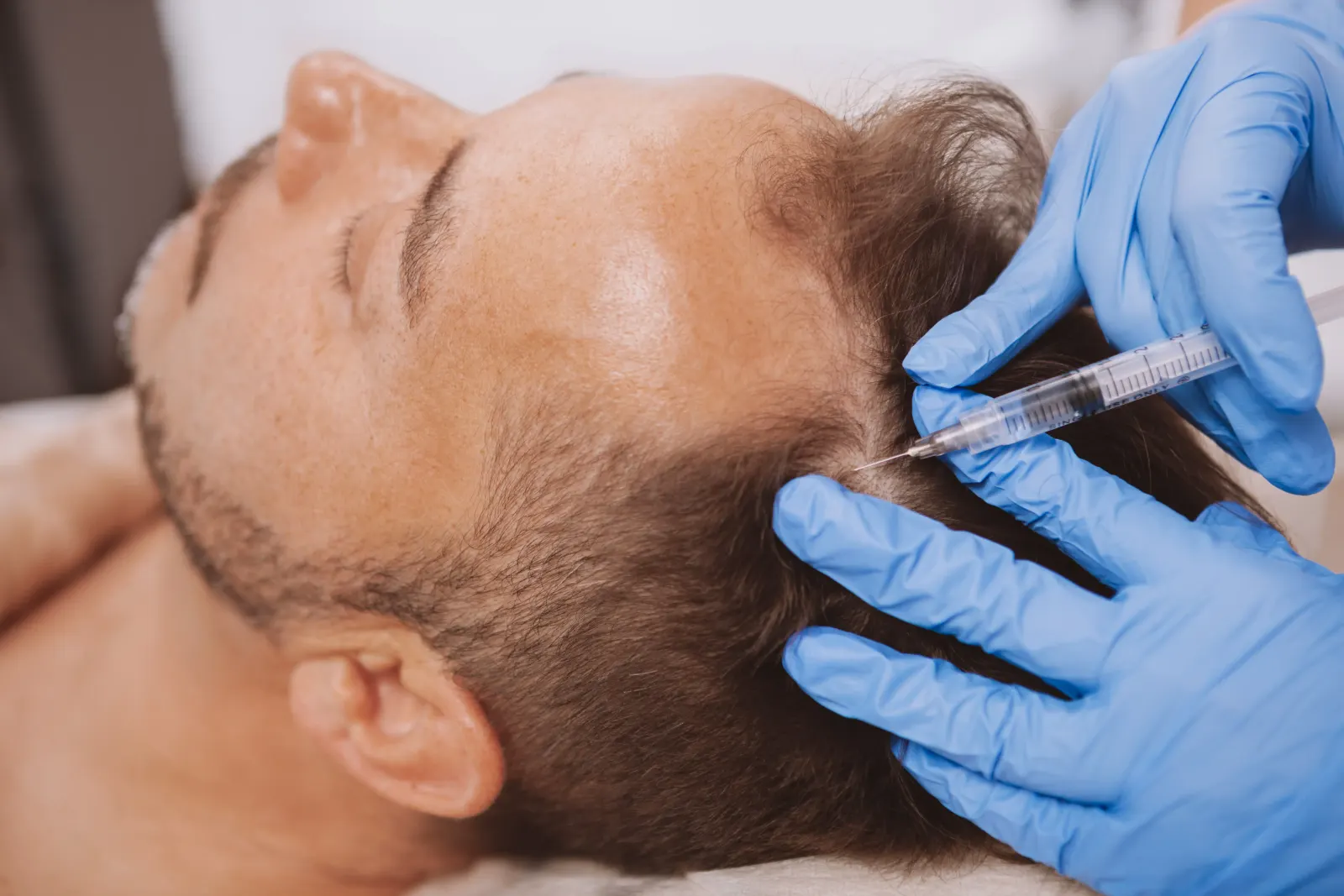
At Clark IV Infusion Therapy Center, PRP therapy is performed by our care team in a private clinical setting. The process begins with a standard blood draw — typically 20 to 60 milliliters depending on the application. The blood is then placed in a sterile centrifuge that spins it at a precise speed to separate the platelet-rich plasma layer from red blood cells and other components. The resulting PRP is then carefully prepared for application. Depending on the protocol, it may be injected directly into the scalp for hair restoration, into periarticular tissue for joint support, or used in conjunction with other treatments for skin rejuvenation purposes.
Sessions typically take 45 to 75 minutes from blood draw through application. Most patients experience minimal downtime — some redness or tenderness at injection sites for 24 to 48 hours is common, particularly with scalp applications. Our clinical team discusses the full protocol, realistic expectations for your specific goals, and any aftercare considerations before your first session. Because PRP uses your own biological material, it is generally well-tolerated, though individual responses to treatment vary, and results are not guaranteed.
Potential supportive benefits
PRP therapy may support the following wellness goals. These are not medical claims, and individual results vary. A clinical screen helps determine which application may be appropriate for you.
Hair restoration support
PRP scalp injections are among the most studied applications; growth factors delivered to hair follicles may support follicle activity and hair density for some patients.
Skin rejuvenation support
When applied in conjunction with microneedling or as a standalone treatment, PRP may support collagen production and skin texture improvement for some patients.
Joint and tissue support
PRP is explored in musculoskeletal wellness contexts for patients seeking supportive adjunctive care for tendon, ligament, or joint comfort alongside other approaches.
Wound and tissue recovery
Growth factors in PRP may support natural tissue repair processes, making it a modality some patients incorporate into recovery-focused wellness plans.
Scalp health
Beyond hair density, PRP scalp injections may support overall scalp circulation and tissue health as part of a broader hair care and scalp wellness routine.
Collagen and regenerative support
Certain growth factors concentrated in PRP — including PDGF and TGF-beta — are associated with collagen synthesis and regenerative signaling in tissue.
What to expect at your visit
Consultation and health screening
Your care team reviews your health history, goals, and any medications or conditions that could affect PRP processing or application. We discuss which protocol is most appropriate for your specific situation.
Blood draw
A standard blood draw is performed using sterile single-use equipment. The amount drawn depends on the application — typically 20 to 60 milliliters. Most patients find this no more uncomfortable than a routine lab draw.
Centrifugation and PRP preparation
Your blood is placed in a sterile centrifuge and spun to separate the platelet-rich plasma from red blood cells and other fractions. The resulting PRP is prepared for your specific application.
Application
The PRP is applied to the target area — scalp, skin, or periarticular tissue — using small-gauge needles. A topical numbing agent is available for sensitive applications. Your care team monitors your comfort throughout.
Post-session care and follow-up
After the session your care team discusses aftercare instructions, what to expect in the days following treatment, and your follow-up schedule if additional sessions are part of the plan.
Who may be a good fit
Adults experiencing thinning hair or reduced hair density who have ruled out medical causes and want to explore supportive adjunctive options
Patients interested in skin rejuvenation who prefer a team-administered clinical setting over medical spa or cosmetic contexts
Individuals incorporating PRP into a broader hair or skin wellness routine alongside other supportive approaches
Patients exploring non-pharmaceutical supportive care for joint or tissue comfort who have already discussed their situation with a healthcare provider
Adults in Westchester County looking for a private, clinically staffed PRP option with transparent expectations and care team oversight
Frequently asked questions
What is PRP therapy?
Platelet-rich plasma (PRP) therapy uses a concentration of your own blood's platelets — which are rich in growth factors — as part of a clinically guided support approach. A small amount of blood is drawn, processed in a centrifuge to isolate the platelet-rich fraction, and then applied or injected into the target area. It is used in both aesthetic and musculoskeletal wellness contexts.
Does PRP therapy use synthetic or foreign materials?
No. PRP is derived entirely from your own blood. Because it uses autologous (self-derived) material, the risk of allergic reaction or rejection is very low. Our care team uses sterile, single-use collection and processing equipment for every session.
How many PRP sessions are typically needed?
For hair restoration, many patients pursue an initial series of three to four sessions spaced four to six weeks apart, followed by periodic maintenance. For other applications, the protocol varies based on your goals and the clinical assessment of our team. We discuss realistic timelines honestly before any sessions are scheduled.
Is PRP therapy uncomfortable?
Discomfort levels vary by application. Scalp injections for hair restoration may cause mild, temporary stinging; a topical numbing agent can be applied beforehand. Joint or tissue applications may be similarly brief. Our care team will discuss what to expect for your specific protocol.
Does PRP therapy treat or cure hair loss or other conditions?
No. PRP therapy is offered as a supportive wellness modality that may complement other approaches to hair health or tissue recovery. It is not a cure for androgenetic alopecia or any medical condition, and outcomes vary significantly between individuals. If your hair loss or other symptoms may have an underlying medical cause, our team will recommend you discuss this with a healthcare provider.
Serving Westchester County
Our clinic welcomes patients from across Westchester County, including White Plains, Yonkers, New Rochelle, Scarsdale, Mount Kisco, Rye, Mamaroneck, Harrison, Bedford, and Chappaqua.